SLIP-UP'N'Slide
Slip-Up’N’Slide is a fast paced multiplayer racing game focused on risk-reward movement and alternate paths. The project was inspired by a previous singleplayer prototype developed during an earlier assignment, which helped define the game’s core identity.
Role: Level Designer
Time: 6 Weeks
Team Size: 12
Engine: Tengine
Genre: Party, Racing
Platform: PS5
Design Focus
My primary focus on this project was level design. The goal was to preserve the tight, skillbased movement of the original game while adapting it for multiplayer.
This required wider tracks, clearer reads, and alternate paths that allowed multiple players to compete without removing the sense of risk that defined the original game.
Level Design
The core appeal of Slip-Up’N’Slide lies in its alternating paths. Each level was designed to give players multiple choices, with faster routes carrying greaterr risk. Rather than clearly telegraphing the optimal path, I aimed to encourage experimentation, allowing players to discover shortcuts through repeated play.
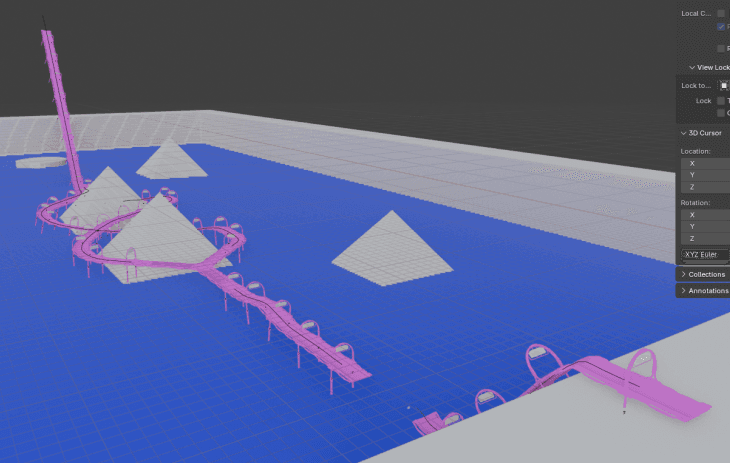
Due to limitations in our in-house engine, we made all of our levels outside of it, inside of Blender using modular pieces.
Level 1
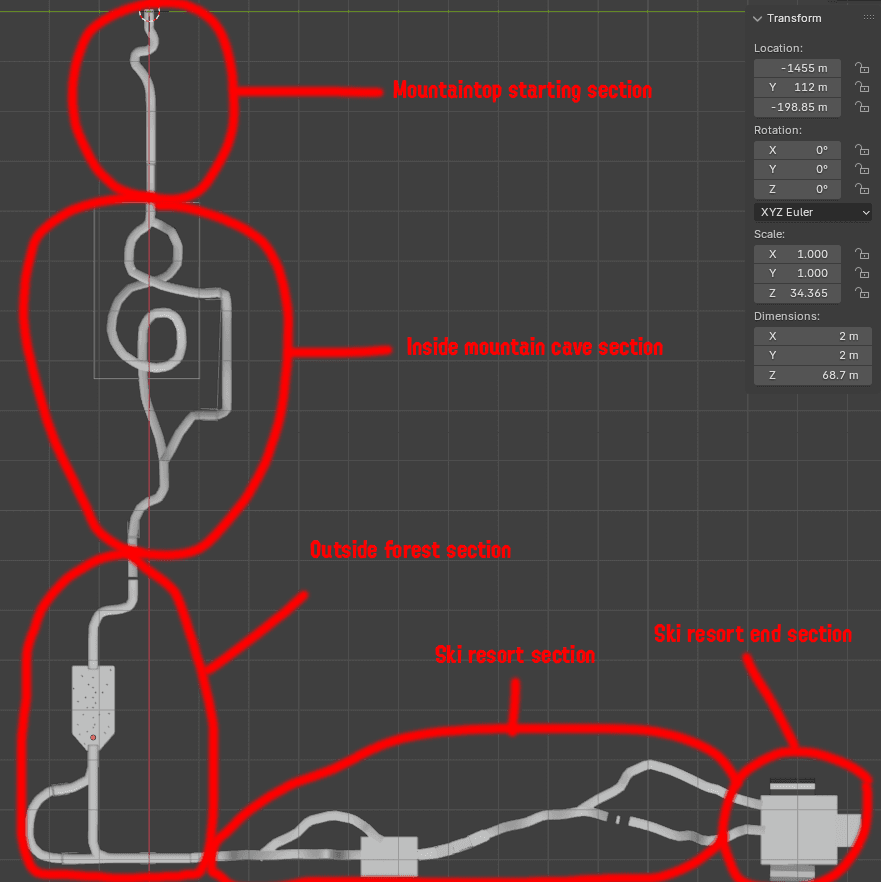
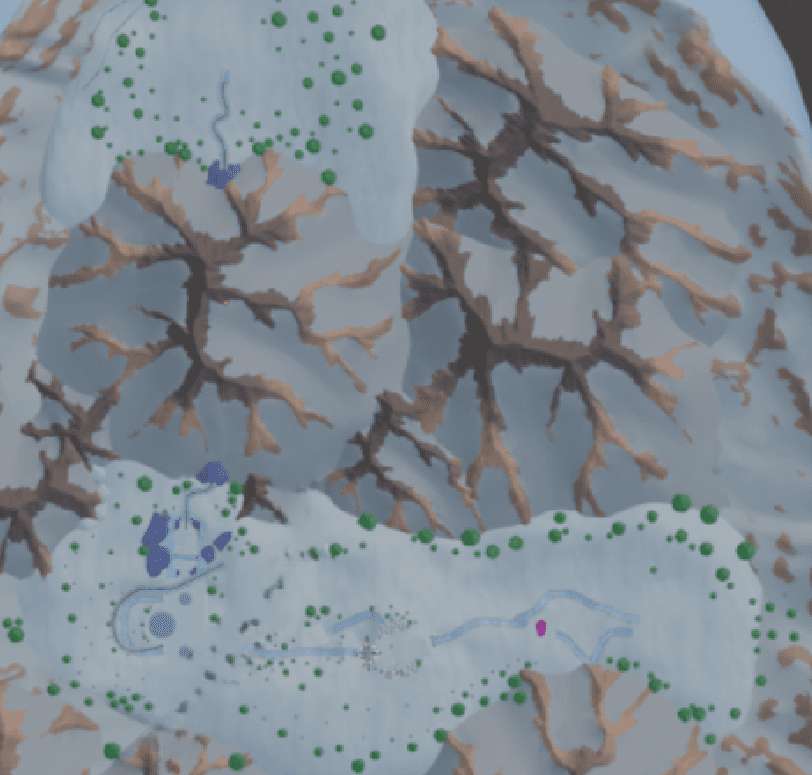
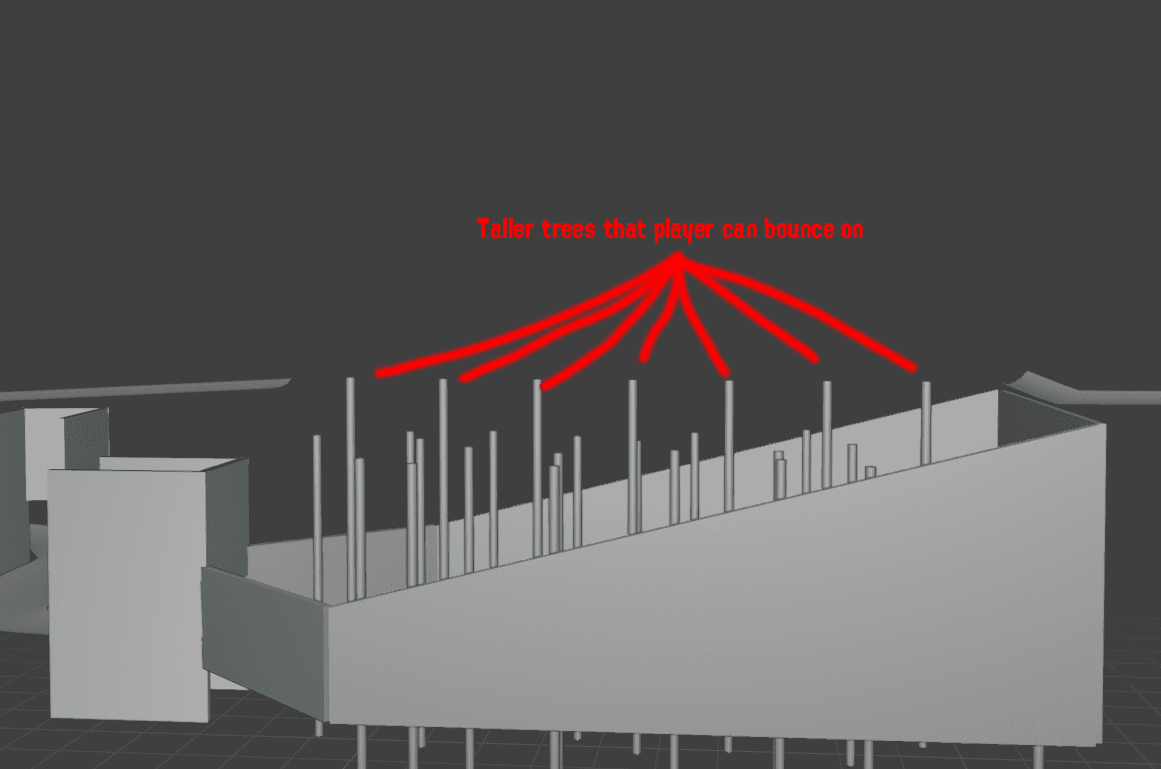
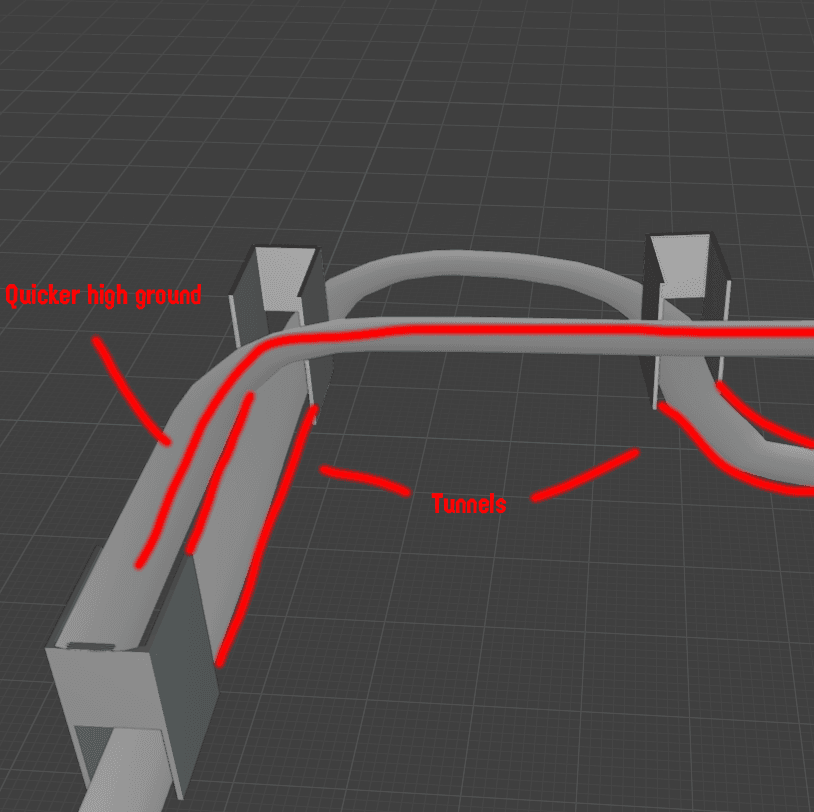
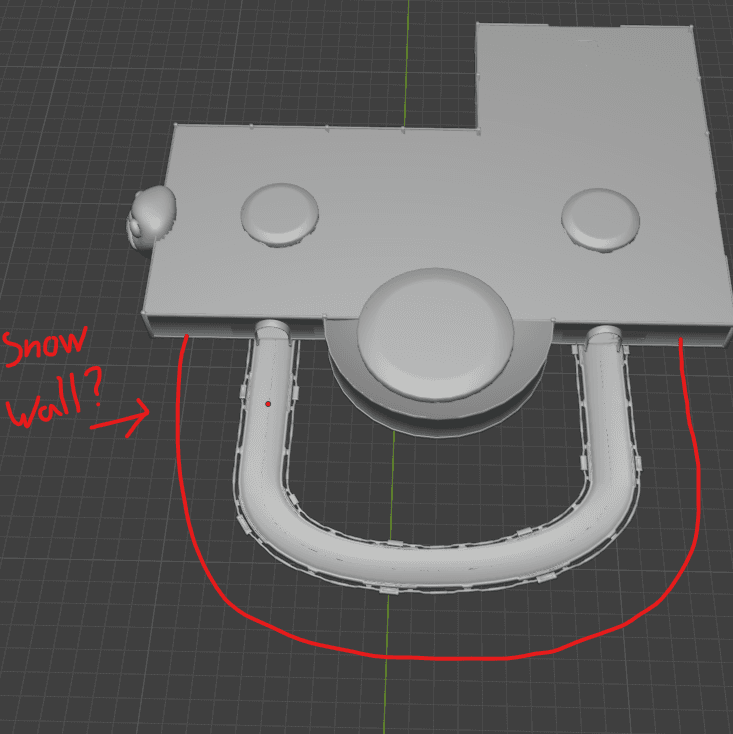
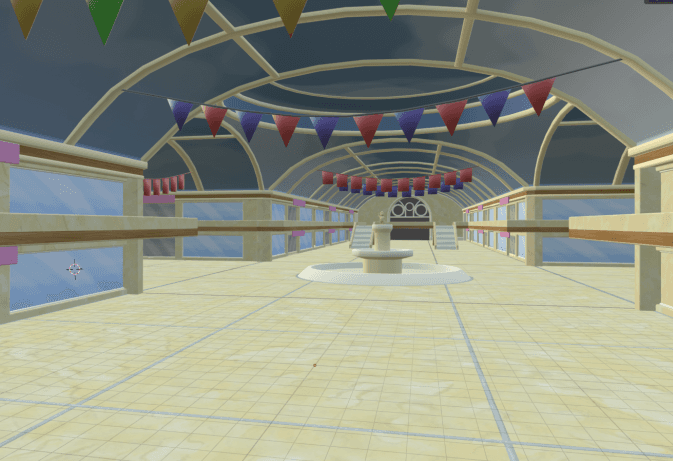
Level one is divided into three distinct segments: a mountain, a shopping mall, and a ski resort. I was responsible for designing the mountain and shopping mall sections. In the opening area, I focused on presenting the player with as many viable routes as possible early on, establishing the game’s emphasis on choice and replayability.
The shopping mall section evolved from an earlier tunnel concept that lacked visual interest. Although the underlying layout remained similar, the environment was redesigned into a shopping mall interior with bouncing balloons and interior jumps. This change preserved the original gameplay intent while improving visual clarity and allowing skilled players to bypass the slower routes.
Level 2
The second level was fully designed but ultimately cut due to memory constraints. Unlike the first level, this one was designed entirely by me. It featured three primary routes with no immediately obvious choice for the fastest route. The central path required more precise movement, while the final ramp challenged players to manage speed carefully, as overshooting would result in a longer fall and a time loss.
One of my personal biggest challenges on this project was comparing it too closely to its predecessor. Over time, I learned that preserving the design philosophy was more important than matching individual features. This project helped me understand how to meaningfully evolve an existing concept while maintaining its identity.
Reflection
Mechaanics
Compared to the original prototype, Slip-Up’N’Slide introduced several new hazards and obstacles. Snow piles slowed players down, balloons enabled vertical movement, and speed pads created high risk shortcuts that could either grant a significant advantage or send the player off the track entirely.
Due to limitations within the in-house engine, Tengine, iteration focused heavily on tuning player movement values rather than rapidly prototyping geometry. Through repeated playtests, I adjusted speed, turning, jump height, and hazard interactions until the game felt responsive and satisfying on both controller and keyboard.