Frightline
Frightline is a narrative-driven horror puzzle-platformer set entirely aboard a moving train. The confined environment was intentionally chosen to heighten tension, limit player comfort, and present unique level design challenges within a narrow, modular space. Unlike my previous projects, this was a concept I pitched myself and guided from inception to completion.
As project lead, I contributed across disciplines while maintaining responsibility for the game’s overall design vision.
Role: Project Lead / Lead Designer
Time: 9 Weeks
Team Size: 15
Engine: Unity 6
Genre: Horror, Puzzle-Platformer
Platform: PC
Leadership & Design Focus
In my role as project lead, I worked closely with narrative, art, and programming leads to ensure the project remained achievable within its timeframe. Frequent communication and playtesting helped us align pacing, mechanic complexity, and narrative beats, allowing tension to escalate naturally without overwhelming the player. As well as ensuring that the end product was feasible within the time frame we were given for this project.
Mechaanics
The game's core mechanic is the weapon that the player wields. It fires orbs of light which is the players primary source of light.
I worked on the mechanics that the player could interact with using these orbs of light.
Spirit
A core mechanic in Frightline is spirit separation, which allows the player to leave their physical body and interact with the environment in unique ways. Early iterations explored traditional possession mechanics, but these approaches either felt too restrictive or too powerful.
The final spirit system struck a balance by allowing free movement while limiting range through a tether, preventing players from bypassing challenges entirely.
Conductor
The game’s antagonist, the conductor, was designed to feel threatening but fair. I was solely responsible for tuning his movement speed, chase behavior, and line of sight. Level geometry was adjusted to block his vision without affecting the player’s, ensuring encounters remained readable. To keep production manageable, I proposed that being caught would forcibly pull the spirit from the player, avoiding the need for complex animations.
Moth Swarm
The final sequence introduces a swarm of moths that chases the player through the train. This mechanic was designed as a climactic payoff to the game’s rising tension. Rather than relying on strict timing, the swarm dynamically adjusts its speed based on distance from the player, maintaining pressure without feeling unfair.
Level Design
Levels were built using a modular workflow, allowing rapid experimentation with layouts and mechanics. I created and tested multiple level concepts early on, identifying which mechanics and spatial arrangements were most effective before refining them into final levels.
The train’s limited space posed a constant challenge, making camera placemennt a crucial tool in shaping player perception and maintaining readability.
Storage Car
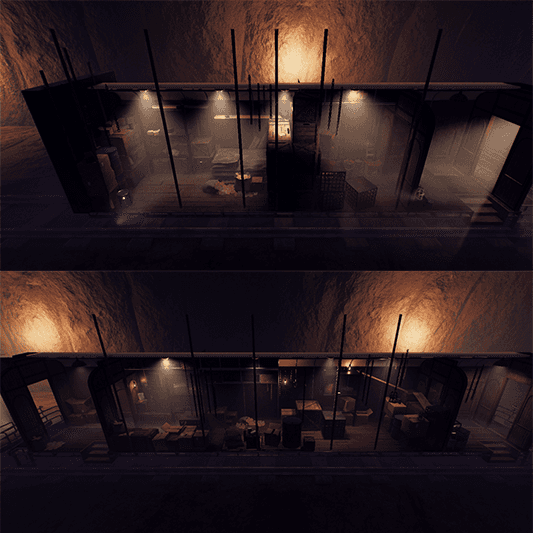
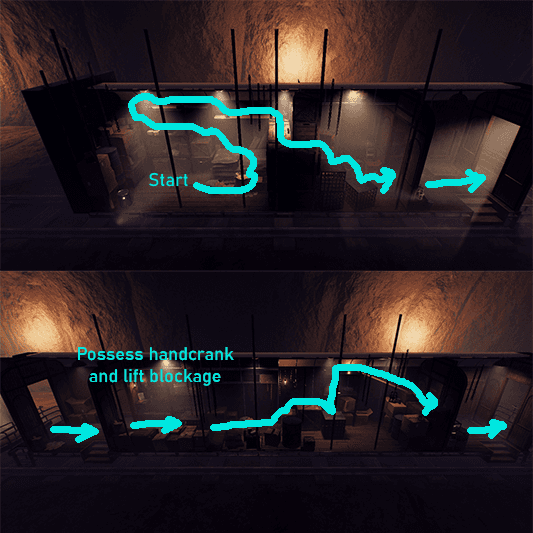

The first storage car introduces the player to basic movement and spirit interaction in a low threat environment. Early puzzles encourage experimentation, culminating in the player using the spirit to operate a handcrank and lift a blocking cage, a concept that later reappears in a more stressful context.
This Level also introduces one of 6 collectibles and puts ephesus on its existence by it being at the center of the player’s view during the final puzzle section
Compartment Car
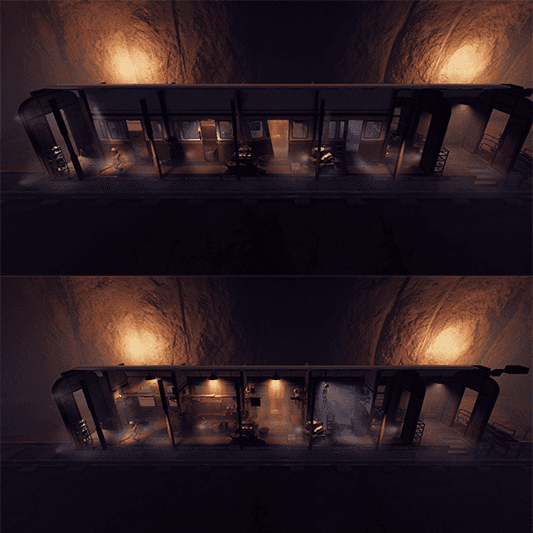
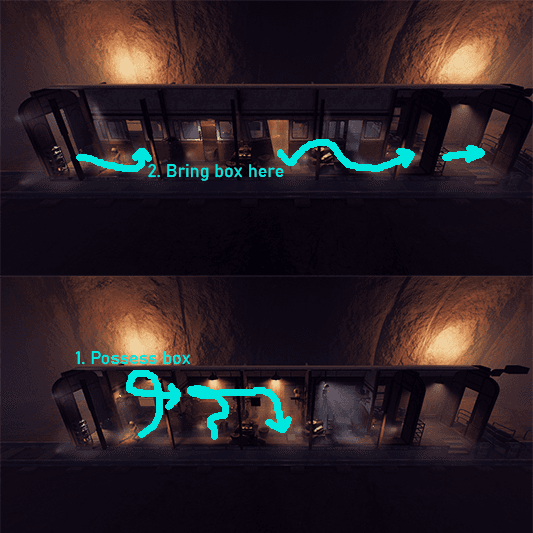
This level introduces sap, a mechanic that slows the player and allows wall traversal. The level limits options early on to avoid overwhelming the player, focusing instead on exploration and comfort with the new movement rules while still expanding on spirit usage and possession.
Kitchen Car
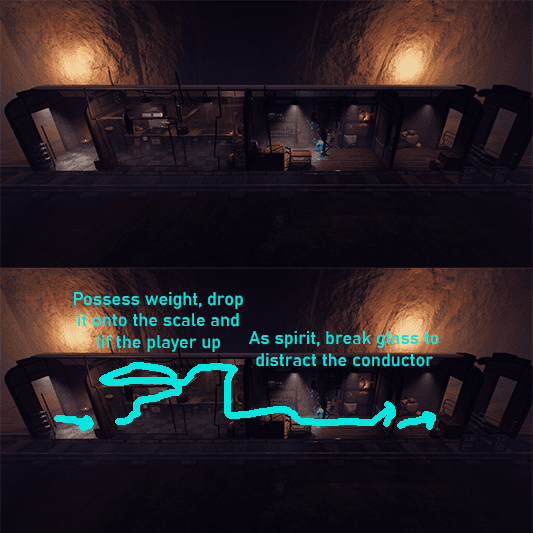
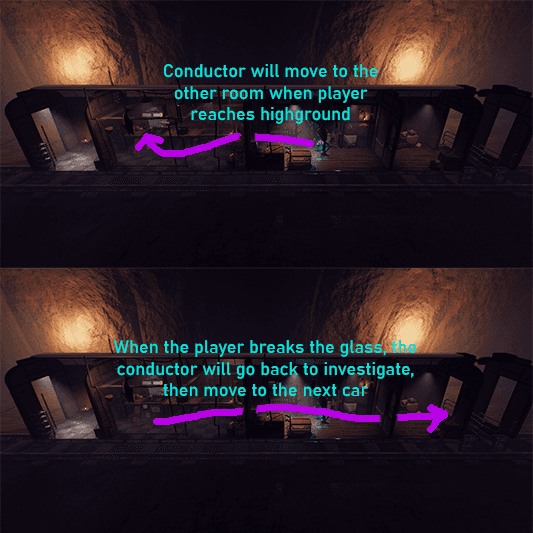
The kitchen car shifts the focus toward atmosphere and tension. By this point, the player is familiar with the conductor, and uncertainty becomes the primary source of stress. A weight-based scale mechanic is introduced here. This mechanic is something I repurposed from a previous, scrapped mechanic. A seesaw that the player could use to reach elevation, or use sudden shifts to launch themselves. The level culminates in a scripted encounter where the player must distract the conductor by shattering a glass to lure him into opening the path forward.
Chase
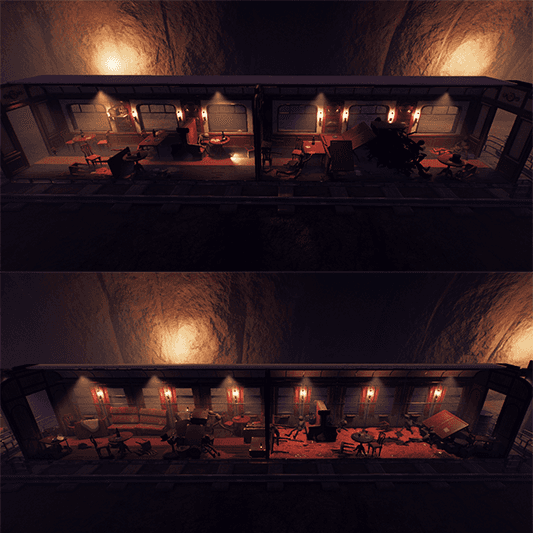
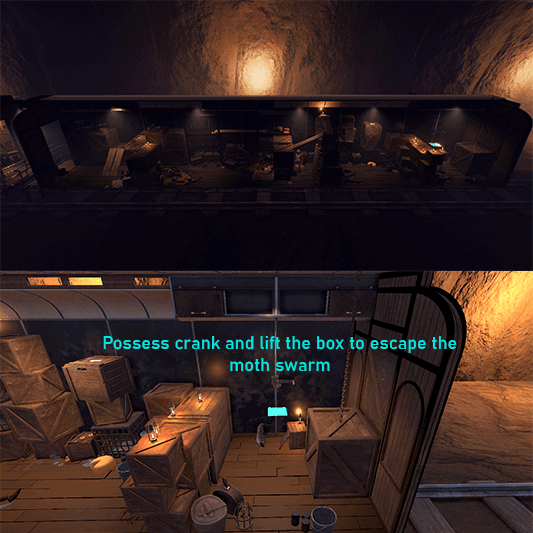
This segment serves as the game’s finale. After extensive experimentation, I intentionally kept obstacles simple, as well as to not use any interactables to avoid distracting players during the high-pressure sequence.
The section consists of three train cars, each of which is referencing a previous train car the player has been through.
The final interaction mirrors the game’s first puzzle, by lifting a box using a handcrank, bringing the experience full circle and reinforcing learned mechanics under stress.
Camera Design
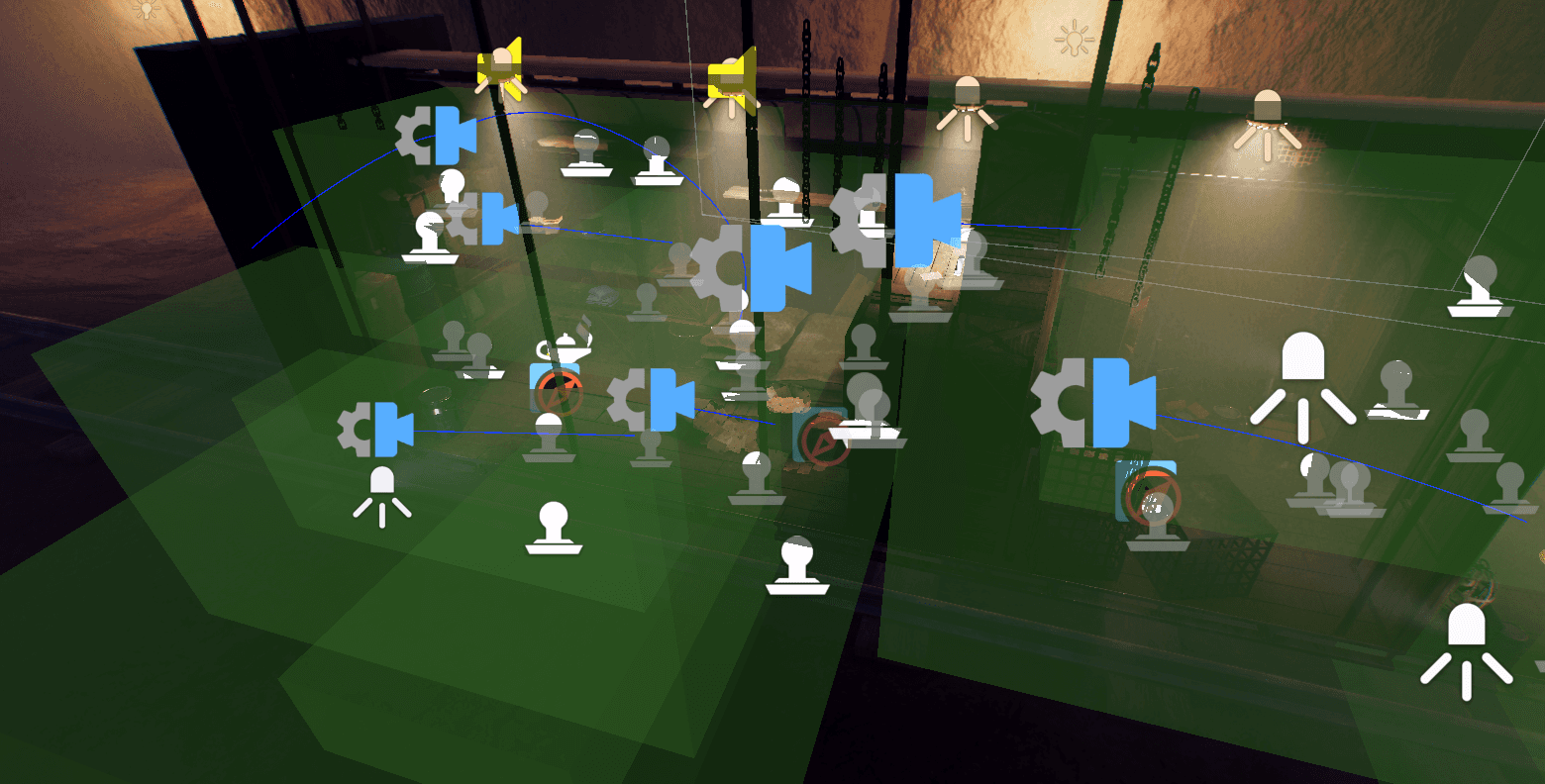
I was one of three developers responsible for camera placement, focusing specifically on gameplay readability. My role was to ensure that players could clearly assess their surroundings without feeling guided too explicitly. Special attention was paid to camera transitions to prevent disorientation when moving between spaces or perspectives.
While we ourselves conducted constant playtests, we learned the value of proper playtests when we scheduled times for people in other teams, as well as people outside of game development to playtest our game. We gained a huge list of things to tweak, fix and change.
Each green cube is a volumetric box for each camera zone.
Playtesting aand Iteration
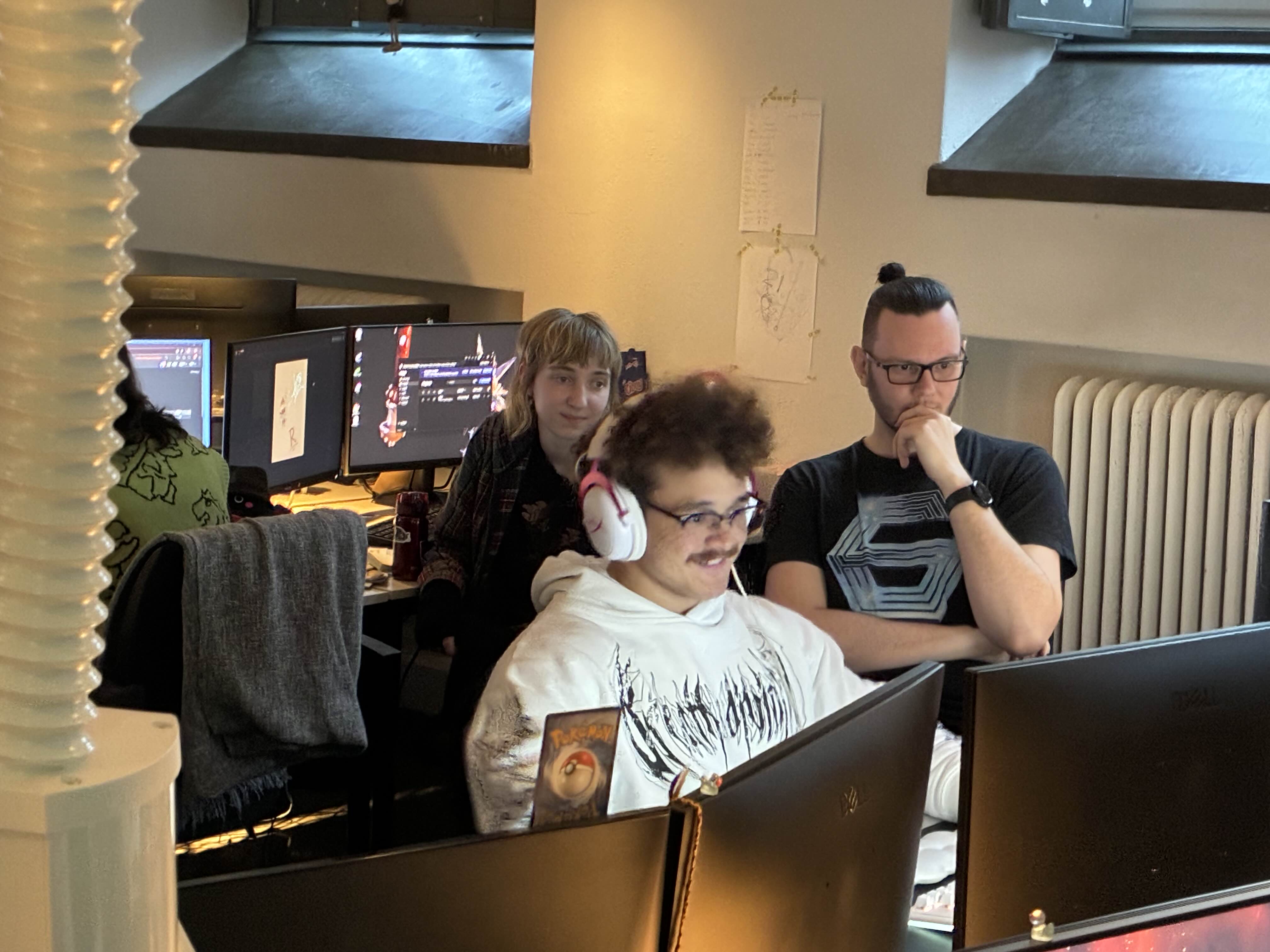
We conducted many playtests to ensure readability. I paid very close attention to what players were looking at, and adjusted accordingly. It was very important to ensure the player could tell what was part of the level design, and what was just set dressing.
While we ourselves conducted constant playtests, we learned the value of proper playtests when we scheduled times for people in other teams, as well as people outside of game development to playtest our game. We gained a huge list of things to tweak, fix and change.
Frightline was a defining project for me as a designer. Leading a multidisciplinary team taught me how to balance creative ambition with production constraints, while the project’s scope strengthened my ability to make clear, player-focused design decisions. It solidified my interest in horror and spatial level design as areas I want to continue exploring. As well as the importance of challenging myself.
Reflection